
How to Choose Fall Activities Without Overloading Your Family's Calendar
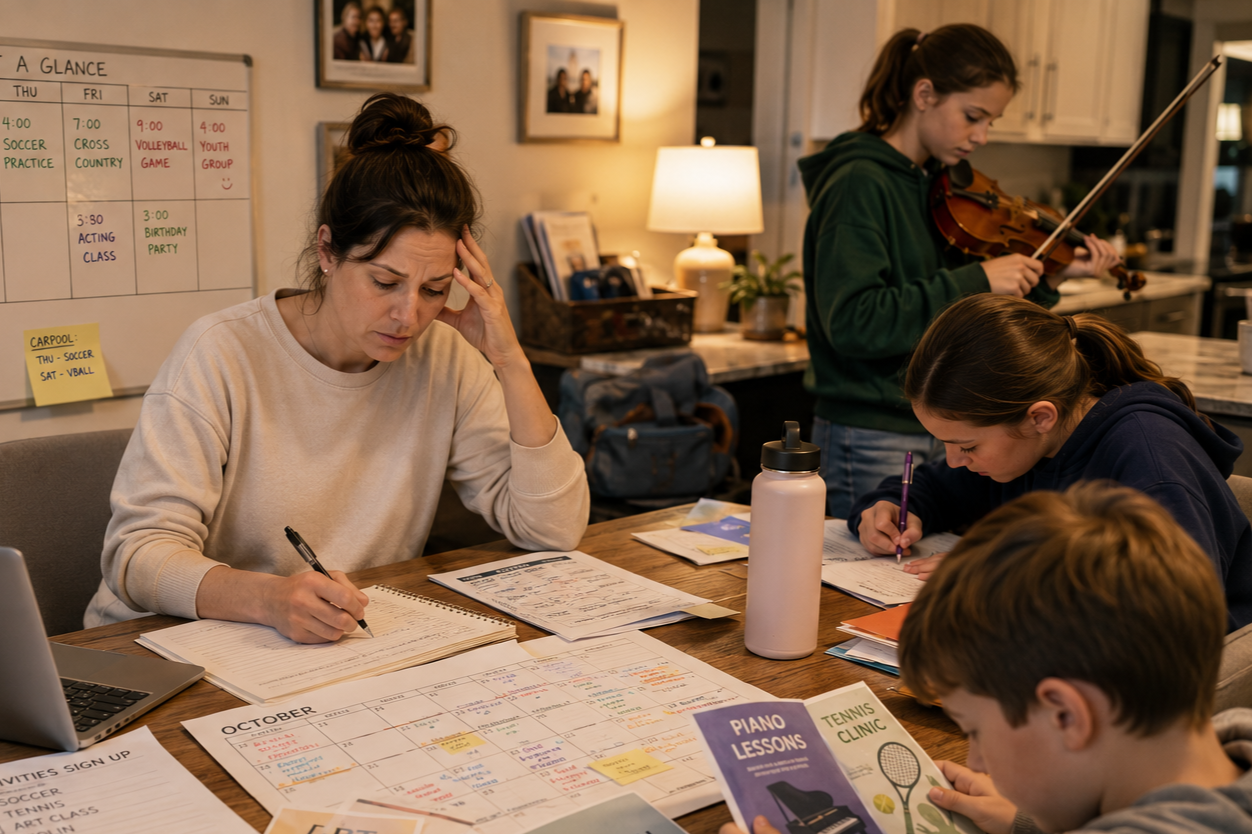
The best way to avoid an overloaded fall calendar is to decide your family's activity capacity before sign-ups open, not after you've already said yes to everything that sounded good in August. Every individual activity seems reasonable on its own: one sport, one instrument, one club. The overload happens because each of those "one more things" gets decided in isolation, without anyone stepping back to look at the whole week. By October, there's a practice or lesson almost every night, and nobody remembers exactly how that happened.
If sign-up forms are already piling up, here's a framework for deciding what actually makes the cut this fall.
1. Set a number before you look at the options
Before browsing sign-up sheets, decide how many activities per child your family can realistically support this season, factoring in transportation, homework time, dinner, and downtime. A common approach is one activity per child per season, with a second allowed only if it doesn't compete for the same evenings. Deciding the number first keeps every individual sign-up decision simple: does this fit inside the number, or not.
2. Map the real weekly cost, not just the practice time
An hour-long practice rarely costs just an hour. Add drive time both ways, pre-activity prep, post-activity meltdown recovery, and the effect on that night's homework and dinner. A single "one hour a week" activity can easily consume closer to three hours of actual family bandwidth once all of that is counted.
3. Ask what each activity is actually for
Not every activity needs to build a college resume. Some exist purely for fun, some for exercise, some for a specific skill, some for social connection. Getting clear on the purpose of each activity makes it much easier to say no to a new option that doesn't add anything a current activity isn't already covering.
4. Protect at least one unscheduled weekday evening
Families who feel calmest in the fall tend to have at least one weekday evening with nothing on the calendar: no practice, no lesson, no obligation. This isn't wasted time; it's the buffer that absorbs a late meeting, a forgotten permission slip, or a kid who just needs a slow night. Treat it as a real commitment, not the first slot to fill when a new sign-up appears.
5. Revisit at the season, not the year
You don't have to commit to an activity for the entire school year the moment you sign up. Most sports and lessons run in seasons or sessions. Give yourself permission to reassess after each one (what's working, what's draining the family, what your child actually still wants to do) rather than assuming August's decisions have to hold through June.
6. Let go of the guilt around saying no
Turning down an activity doesn't mean limiting your child's future. It usually means protecting the bandwidth that makes the activities you said yes to actually enjoyable, rather than one more box to check between school and bedtime. A shorter list, done well and without resentment, tends to serve kids better than a packed one where everyone is just trying to survive.
How Friday Can Help
Deciding what to sign up for is only half the battle. Coordinating registration deadlines, driving logistics, and schedule conflicts across multiple kids' activities is a job in itself. Friday's personal assistants can manage activity sign-ups, build out the carpool and pickup logistics, and help you see the full picture before you commit to another season. You don't have to map it all out alone.
Schedule a complimentary consultation to get support managing your family's fall activities, serving families in Nashville and Denver.
Frequently Asked Questions
How many extracurricular activities should a child do? There's no universal number, but many families find one activity per child per season is sustainable once drive time, homework, and downtime are factored in. Add a second only if it doesn't compete for the same evenings.
How do I know if my family's schedule is overloaded? A good sign is whether there's at least one weekday evening with nothing scheduled. If every evening includes a practice, lesson, or obligation, the calendar likely needs to be trimmed.
Can we change activities mid-year if it's not working? Yes. Most sports and lessons run in seasons or sessions, which is a natural point to reassess rather than waiting for the whole school year to end.
