
Morning & After-School Routines That Actually Stick This School Year
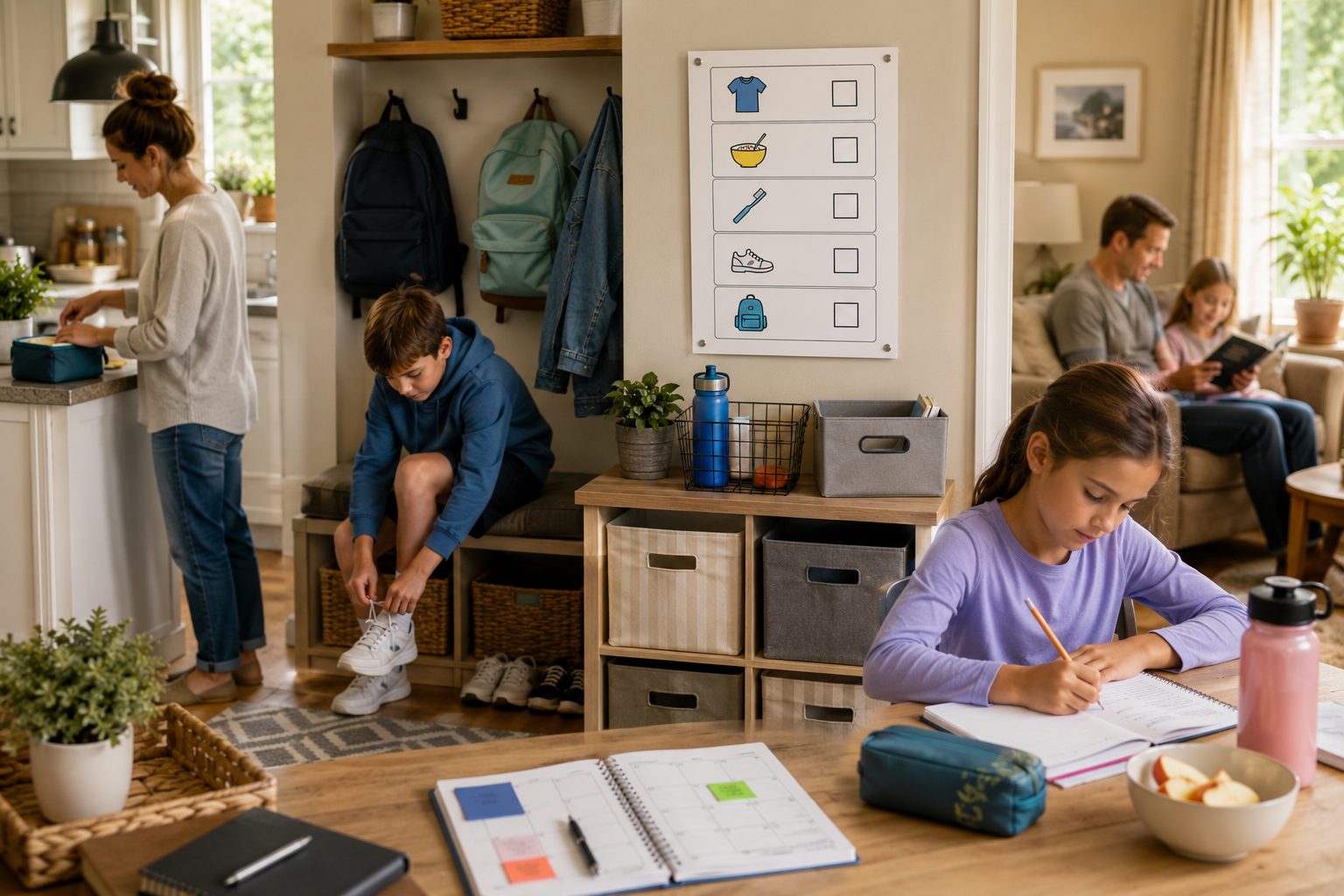
A school-year routine sticks when it's built around your family's actual pace rather than an idealized version of mornings — meaning fewer steps, visual reminders kids can follow without you, and consistent timing every single day, including weekends when possible.
Most routines fail not because the plan was wrong, but because it required more willpower than a 7 a.m. household actually has.
Here's how to build morning and after-school routines for Nashville and Denver families that hold up past Labor Day.
Why most back-to-school routines fall apart by week three
The typical new-school-year routine collapses for a few predictable reasons: it has too many steps, it depends on a parent narrating each one out loud every morning, or it was built around a "perfect day" instead of a realistic one with a sick kid, a missing shoe, or a forgotten reading log. A routine that survives real life is simpler than you think it needs to be.
Building a morning routine that doesn't require a referee
Start the night before
The single highest-leverage habit for calm mornings happens after dinner, not at 6:45 a.m.:
Lay out clothes (let kids choose from two options to avoid a debate)
Pack lunches and backpacks, and set them by the door
Sign any forms and put them directly in the backpack
Confirm tomorrow's schedule — early release, gym clothes, picture day — during your evening check-in
Use a visual checklist instead of verbal reminders
Kids (and let's be honest, adults too) respond better to a posted checklist than to being told the same five things every morning. A simple list — get dressed, eat breakfast, brush teeth, pack shoes, backpack by the door — taped at kid height removes you from the role of full-time narrator.
Anchor the morning to a wake-up time, not a "have to leave by" time
If the only deadline is the moment you must leave, every minute before that feels negotiable. Set an earlier anchor — a consistent wake-up time — and build 10–15 minutes of buffer before the real deadline. That buffer absorbs the inevitable missing shoe.
Building an after-school routine that prevents the 4 p.m. meltdown
After-school hours are harder to control than mornings because energy, hunger, and homework collide all at once. A few adjustments make a real difference:
Feed first, talk second. A hungry kid can't process "how was school," let alone start homework. A snack within 15 minutes of walking in the door resets the mood for the rest of the afternoon.
Build in true downtime before homework. Kids who go straight from a full school day into worksheets often resist harder and take longer. Even 20–30 minutes of unstructured time improves focus afterward.
Set a consistent homework window, same time and same spot every day, rather than "whenever we get to it." Predictability reduces the daily negotiation.
Protect the wind-down before bed. Screens off, lights dimmed, and a consistent bedtime routine matter more for next-day performance than an extra 20 minutes of practice or homework.
The weekly tune-up that keeps routines from drifting
Routines naturally erode — a later bedtime here, a skipped lunch-packing step there — until by week four you're back where you started. A five-minute Sunday check covering the week's schedule, any upcoming early releases, and what needs to be restocked (snacks, school supplies, uniform pieces) keeps the routine from quietly falling apart.
Frequently Asked Questions
How do I create a school routine that actually sticks? Keep it simple, prep the night before, use visual checklists instead of verbal reminders, and anchor mornings to a consistent wake-up time with built-in buffer rather than a hard deadline.
What's the best after-school routine for kids? Feed them first, allow genuine downtime before homework, keep a consistent homework time and location, and protect a calm wind-down before bed.
How long does it take for a new routine to stick? Most child development specialists suggest two to three weeks of consistent repetition before a routine starts running with less resistance — stay consistent through the rough first week rather than abandoning the plan.
How Friday Can Help
Building the routine is one thing. Holding the household to it every single day — restocking lunch supplies, managing the evening prep, keeping the visual checklist current as kids grow out of it — is where most parents run out of bandwidth. Friday's personal assistants can manage the recurring errands and household admin behind your family's routines, from grocery runs to organizing the morning launch pad by the door, so the system you build actually holds.
Schedule a complimentary consultation to see how Friday supports families in Nashville and Denver through the school year.
