Delegation Is Baby Steps: How to Hand Off Your Home Without Losing Control
By Friday PA
The best way to start delegating household tasks is with recurring, low-stakes ones, like making the beds, restocking the fridge and filling the coffee maker. Write them on a simple list, hand that list to one consistent person and agree on how you'll communicate and what "done" looks like. Then add more as trust builds. A standing schedule and fair, consistent pay turn that first handoff into a long-term partnership.
I think delegation is like baby steps. You've got to go one step at a time.
Picture it: it's Sunday night, the dishwasher is full, the laundry basket is overflowing and you're staring at a to-do list that somehow got longer over the weekend. You know you need help. You just don't know where to start.
When families come to Friday, they're usually stuck in one of two places. Some are so overwhelmed they want to hand off everything on day one. Others have been doing it all themselves for so long that they can't picture anyone else folding their towels. Funnily enough, both end up in the same spot: frustrated, still tired and convinced that delegation "just doesn't work for us." It does work. It just works in steps. Let me walk you through them.
How do I know it's time to get help?
You'll know it's time when the list starts running you instead of the other way around. You know the feeling. There's a dark cloud over you. You have fifty things on your to-do list, and you just can't seem to get any of them done.
And by the way, that's the worst feeling there is. You had all these things to do, you went through an entire day, and nothing got done. Not because you weren't busy, but because you were busy all day and the list somehow got longer.
That's the moment. That's when you need to stop and say, "Okay. I can hand off some of this. How many of these tasks can I hand off?" If that question just made your shoulders drop a little, keep reading. You're in the right place.
What household tasks should I delegate first?
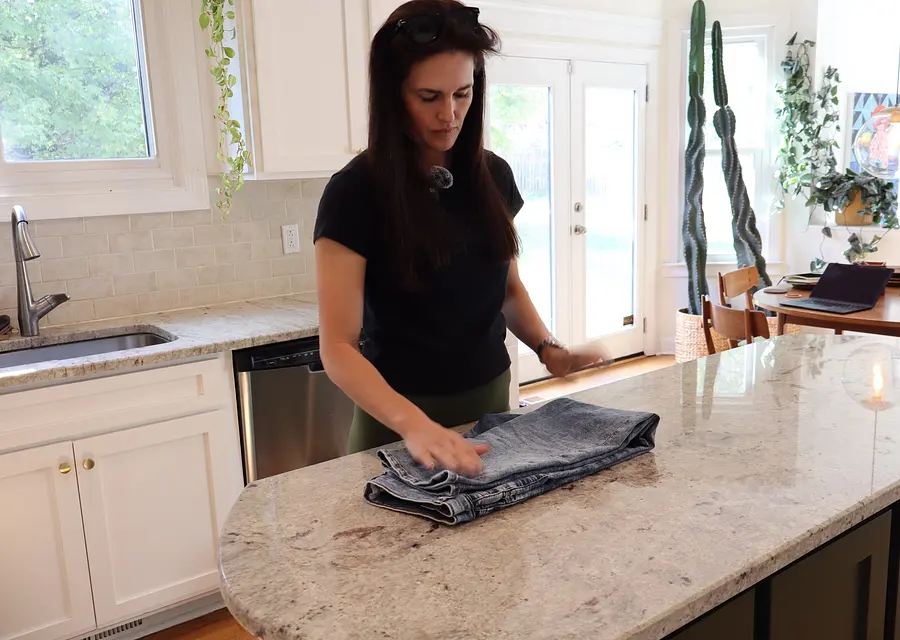
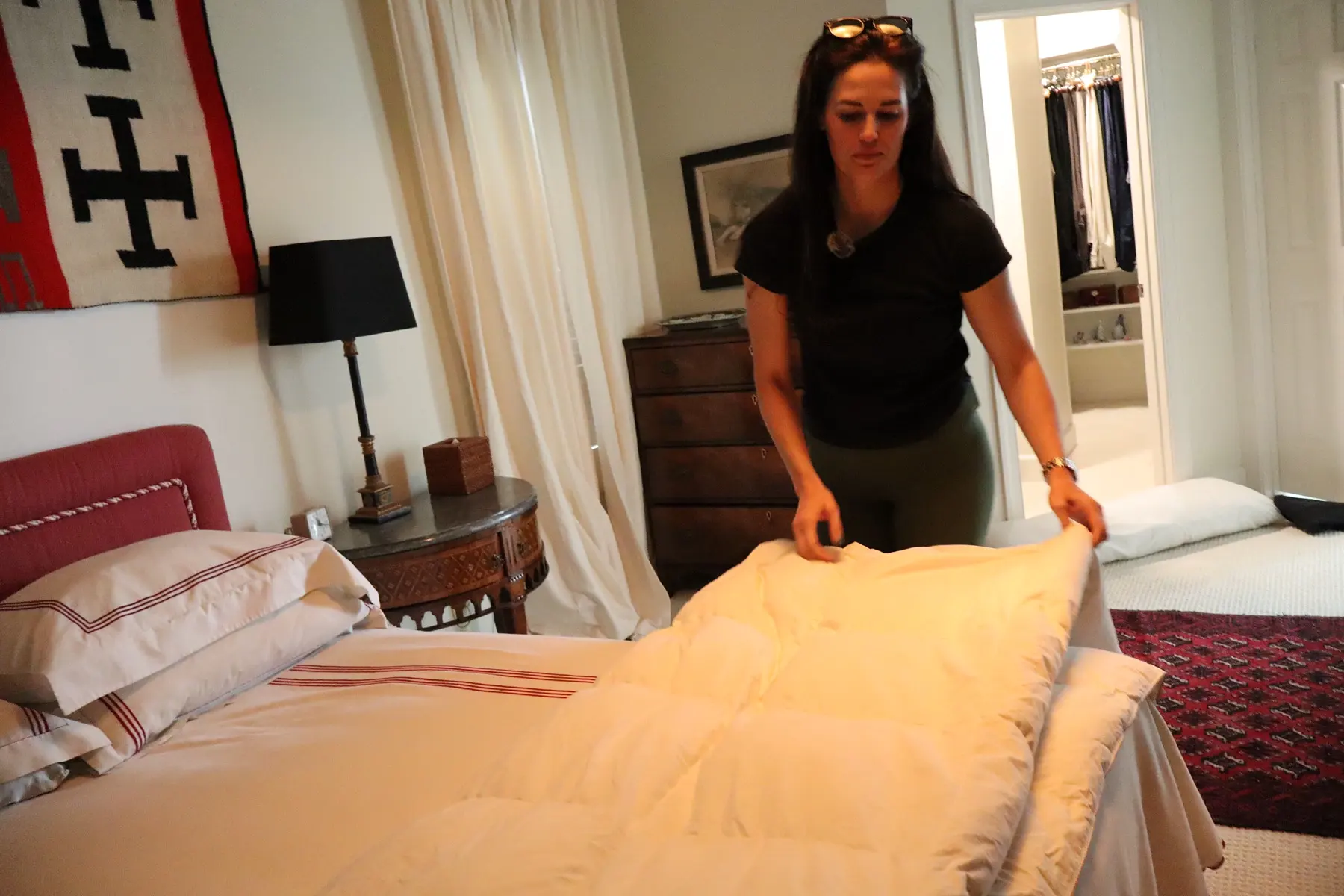
Delegate the things that repeat first. The easiest way to start is with recurring tasks, stuff like making your bed, filling up the coffee maker, restocking the refrigerator, emptying the dishwasher and folding and putting away the laundry.
There's a reason I always start here. Recurring tasks are low stakes, so if the towels get folded in thirds instead of halves the first week, nobody's harmed and you can adjust. They have a clear "done," because the bed is either made or it isn't. They pay off every single week, so one handoff saves you time over and over again. And they're the open loops that live in your head constantly, which means handing them off quiets the mental noise faster than anything else. (I wrote about what happened when I handed off one tiny task, and it surprised me how much it changed.)
So make it simple. Start with the small, repeating stuff, and then you can start pushing off more things.
How do I start delegating household tasks to someone else?
Make your list, and give it to your person. That's really the whole secret. That's how you start.
You don't need a perfect system or a fancy app. You need a written list that you and your assistant can both see. For each task, I suggest writing down four things: what the task is, how often it happens, what "done" looks like and where the supplies live. For example:
- Make the beds, every visit. Done means the sheets are tucked, the pillows are arranged and the throw is folded at the foot. Extra sheets are in the hall closet on the top shelf.
- Restock the fridge, weekly. Done means milk, eggs, fruit and sparkling water are stocked. The running grocery list is on the fridge door.
- Laundry, every visit. Done means washed, folded and put away, with sweaters folded and button-downs hung.
- Coffee, every visit. Done means the reservoir is full and the pods are restocked. Pods live in the pantry, on the left.
At Friday, that list lives in the shared task list inside the Friday portal. You can add to it from your phone the moment something pops into your head, and your personal assistant sees it before their next visit.
One more tip: write down your way. Every household does things differently. Some people want their sweaters hung on a special hanger, and some want them folded. There's no wrong answer, only an unwritten one. A well-trained personal assistant will know several methods and happily use whichever one you prefer, but they need you to tell them which one that is.
Why does it matter who I hand it to?
It matters because consistency is what makes delegation stick. This is where a lot of people get tripped up. They hire whoever's available this week, someone different next week and nobody the week after. Every handoff starts from zero, and they end up spending more energy explaining than they save.
What really builds a long-term relationship is consistency. At Friday, we recommend a minimum of three hours per visit and the same schedule every week, the same day and the same time. When someone knows, "I'm going to be at your house every Tuesday at nine," they start planning around you. They learn where everything goes. They start anticipating what you need, sometimes before you know you need it.
Compare that to booking someone one week, skipping the next, and then calling in a panic when the house is upside down. That inconsistency is never going to get you the quality you want.
Does how I pay my assistant really matter?
Yes, more than most people expect. I truly think one of the best ways to create a lasting relationship is paying your personal assistant properly, and that means through a W-2.
When someone works in your home on a regular schedule, they're generally considered your household employee. Paying them properly protects you, and it tells a great assistant that this is a real job worth staying in. At Friday, you pay your assistant directly as your W-2 employee through the Friday portal, and we take care of payroll and payroll taxes. (Here's exactly what that costs, with real numbers.)
When you put consistent hours together with consistent pay, you get a long-term person who's going to really care, and really take care of you.
How should my assistant and I communicate?
However works best for you, as long as you both agree on it early. Every client is different. I have some clients I only text, some who mainly email and some who just love a phone call. None of those is wrong.
In your first week, it helps to tell your assistant three things. First, your channel: text, email, a phone call or the portal. Second, your timing: do you want questions batched into one end-of-visit message, or is it fine to text you anytime? Third, your threshold: what they should just handle and what they should check with you about first. For example, "Any purchase over fifty dollars, check with me."
A good assistant will adapt to you without being told. Saying it out loud just gets you both there faster.
What if I can't stop checking everything?
That's completely normal, and it gets easier. For the first few weeks, you'll want to look over everything. But every time you re-check a task, you're keeping it in your own head, which is the exact thing you're trying to stop doing.
Here's what I suggest. For the first two weeks, give feedback once, at the end of the week, instead of in the moment. If something isn't quite right, adjust the list, not your vigilance. Once you trust that "done" really means done, let yourself stop checking. That's usually when the relief actually arrives.
What comes after the basics?
Once your recurring tasks are running smoothly, usually a month or two in, you can add the next layer. That might be weekly errands like grocery runs, returns, dry cleaning and donation drop-offs. It might be meal prep, where your assistant shops, washes, chops and cooks for the week ahead. It might be mail and packages, opened, sorted and put away instead of piled on the counter. It might be vendors: finding reliable people, scheduling them and being there when they arrive. Or it might be seasonal projects like the closets, holiday decor or the garage you've been avoiding.
Many of our families eventually have an assistant who handles nearly all of that. But none of them started there. They all started with a list.
What does it look like a few months in?
A few months in, it looks like walking into a home where the work is already done. Here's a real twice-a-week routine from a Friday home: the assistant empties the dishwasher and tidies the kitchen, makes all the beds, folds all the clothes and puts them away, goes to the grocery store and meal preps for the week ahead.
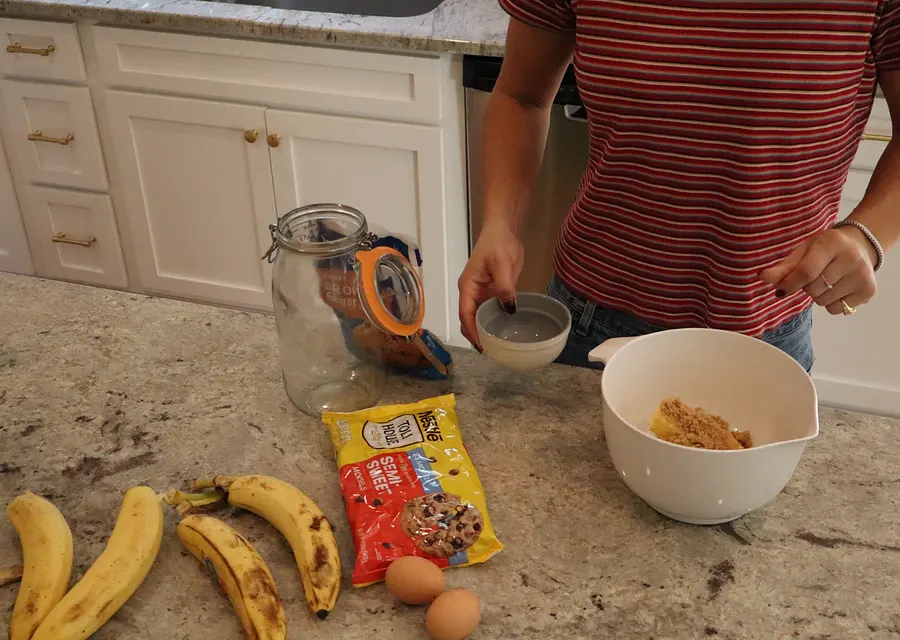
She also makes a chocolate-chip banana bread the kids are obsessed with. About ten loaves so far, and counting. That family didn't hand all of this off on day one. They started with a handful of recurring tasks on a list, and it grew from there, one baby step at a time.
What should personal assistants know about helping clients delegate?
If you're a personal assistant, you play a huge role in whether delegation sticks. Your clients are handing you their home and their trust, and a lot of them have never done it before.
So ask for the list, and help write it. Many clients honestly don't know where to begin, so walk the house with them and suggest the recurring tasks you'd take on first. Confirm what "done" looks like in their words, and then do it that way every time. Match their communication style, whether that's texts, emails or calls. Show up on schedule, because consistency is the biggest trust-builder you have. And earn the next layer: nail the basics, then offer to take on more.
Remember, too, that at Friday you choose your clients as much as they choose you. After the interview, you decide whether the family is the right fit for you. That two-way choice is a big part of what makes long relationships possible. If you'd like to work this way, Friday PA Certification is free for a limited time and open to any personal assistant.
Frequently asked questions
What household tasks should I delegate first?
Start with recurring, low-stakes tasks that have a clear finish line, like making the beds, laundry, restocking the fridge, emptying the dishwasher and refilling supplies. Add errands, meal prep and vendors once trust is established.
How do I write instructions for a personal assistant?
For each task, write down what it is, how often it happens, what "done" looks like and where the supplies live. Keep the list somewhere you can both see and update, like the shared task list in the Friday portal.
How many hours a week should I start with?
Friday recommends at least three hours per visit on a consistent weekly schedule. Many families start with one or two visits a week. Our find your hours tool can help you estimate.
How do I keep a good personal assistant long term?
Offer a consistent schedule, pay them properly through W-2 payroll, communicate the way you both prefer and give them more responsibility as trust builds.
What if I'm just not good at delegating?
Almost nobody is at first. Start with one task, write down your way of doing it and resist re-checking for two weeks. Delegation is a skill, and it gets easier with every handoff.
Tonight, make your list. Just five recurring tasks, written down your way. That's step one. When you're ready for step two, give it to your person. And if you don't have that person yet, take a look at how it works, and when you're ready, let's find them together.