The Home Fire Safety Checklist Every Homeowner Should Run Twice a Year
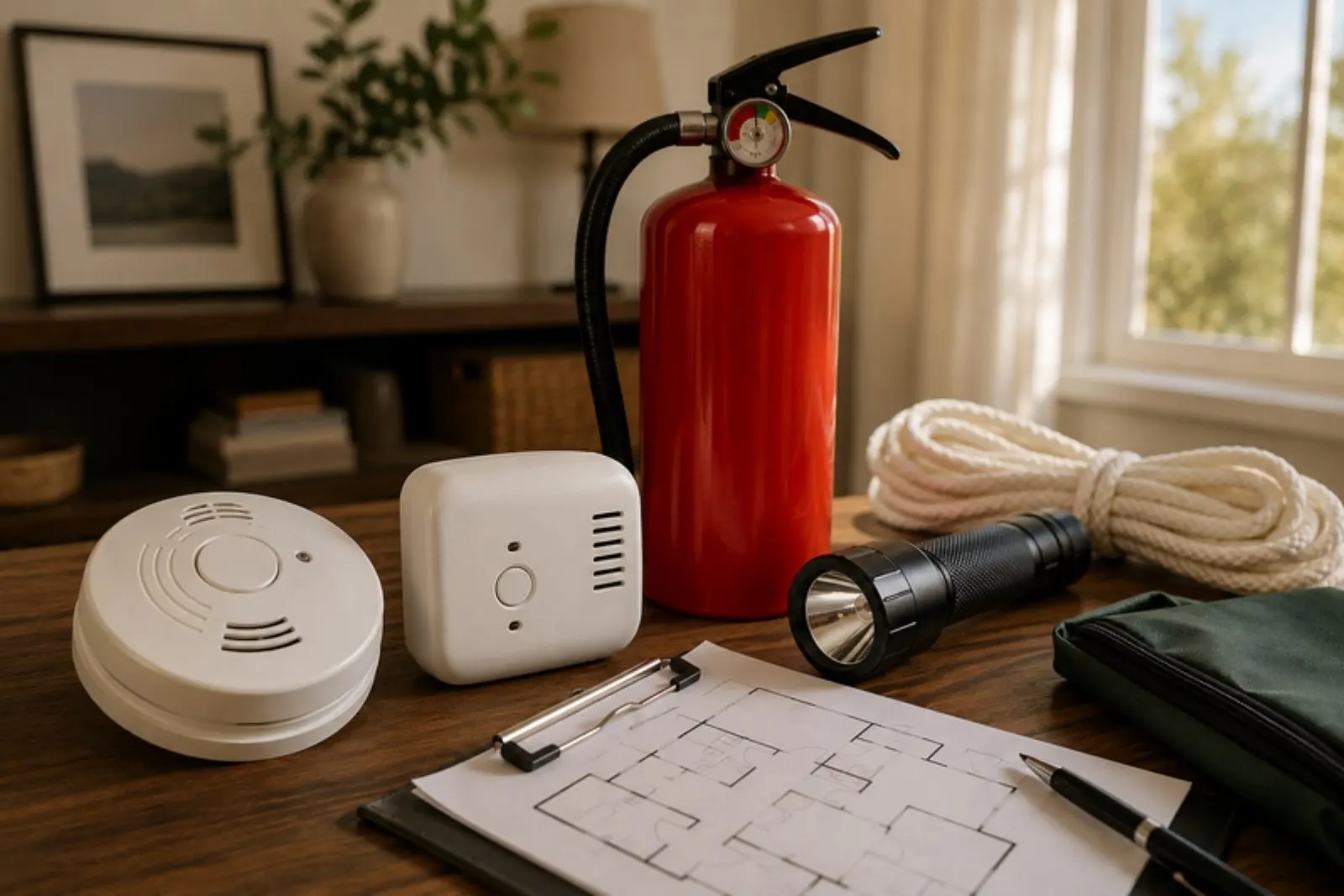
A complete home fire and safety check covers four things: smoke and carbon monoxide detectors, the dryer vent and lint trap, fire extinguishers, and a household emergency plan. Each one takes only a few minutes to check, and together they address the areas where most preventable home fire deaths and injuries actually happen. Most households own all of this equipment already. The problem isn't ownership, it's that these devices tend to get installed once and then forgotten for years.
This checklist breaks down each item, explains what the research says about why it matters, and covers what most homeowners get wrong. It pairs naturally with our broader fall home maintenance checklist, but fire and safety devices deserve their own closer look, since the stakes here are higher than a clogged gutter or a drafty window.
Why This Checklist Matters More Than It Feels Like It Does
It's easy to assume a smoke detector on the ceiling is doing its job simply because it's there. The research says otherwise. Working smoke alarms cut the risk of dying in a home fire by 60 percent, according to the National Fire Protection Association, yet roughly three out of five home fire deaths happen in homes with no smoke alarms or no working ones. Ninety-nine percent of U.S. households have at least one smoke alarm installed, but a third of people never test them, which means a lot of that safety margin exists on paper only.
Carbon monoxide carries its own quiet risk, since it's invisible and odorless by nature. CO poisoning is the leading cause of poison-related death in the United States and is associated with hundreds of accidental deaths and roughly 20,000 nonfatal injuries every year, according to the CDC. Deaths cluster in the winter months, which lines up with exactly the season when furnaces and other fuel-burning appliances are running the most. A CO detector without a working battery offers the same false sense of security as a smoke alarm nobody has tested.
Dryer vents round out the picture, and they're the item people are most likely to forget entirely. Failure to clean equipment, including lint-clogged dryer vents, is the leading contributing factor in clothes dryer fires, which cause an estimated 13 deaths and $238 million in property damage annually, according to NFPA research. Unlike a smoke detector, a dryer vent gives almost no visible warning that it's becoming a hazard until lint has built up for months or years.
The Complete Fire and Safety Device Checklist
Smoke and Carbon Monoxide Detectors
Test every smoke detector and carbon monoxide detector in the home, and replace batteries even if they still seem to be working. Press the test button on each unit rather than assuming it's fine because the light is blinking, since roughly 16 percent of homes that believed all their alarms were operational found at least one with an issue once they actually tested it. Smoke alarms should be replaced entirely every 10 years, and CO detectors every five to ten years depending on the manufacturer, regardless of how well they seem to be functioning.
Make sure there's at least one smoke alarm on every level of the home and inside or near every bedroom, and place CO detectors near sleeping areas as well. If your home has a basement, attached garage, or gas appliances, a CO detector near those areas adds an extra layer of coverage. Interconnected alarms, where one going off triggers all of them, offer meaningfully more warning time than standalone units scattered through the house.
Dryer Vent and Lint Trap
Clean the lint trap after every load, and clean the dryer vent itself at least once a year, more often if you do laundry frequently or have a long or bent vent run. A vent that's warm to the touch during a cycle, clothes that take longer than usual to dry, or a burning smell are all signs the vent needs attention sooner than the annual schedule. Rigid metal venting is safer than flexible plastic or foil, since it's less prone to sagging, kinking, and trapping lint in ways that are hard to see or reach.
Fire Extinguishers
Check that fire extinguishers are accessible, charged, and not past their expiration date. A pressure gauge in the green zone means the extinguisher is ready to use, while a needle in the red means it needs to be recharged or replaced. Keep at least one extinguisher on each level of the home, with priority placement in the kitchen, and make sure every adult in the household actually knows where each one is and how to use it, since a fire extinguisher nobody can find is functionally the same as not having one.
Household Emergency Plan
Review or set up an emergency plan if you haven't done so recently, particularly if your household has changed since the last time you thought about it. A good plan identifies two ways out of every room, a designated meeting spot outside, and a clear understanding of who is responsible for young children, older family members, or pets during an evacuation. The NFPA recommends practicing this plan twice a year, once during the day and once at night, since a fire at 2 a.m. requires a very different response than one at 2 p.m.
What Homeowners Often Get Wrong
The most common mistake isn't skipping the equipment altogether, it's assuming equipment that's present is equipment that works. A smoke alarm mounted on the ceiling for eight years without a battery change, a fire extinguisher bought when the house was purchased and never inspected since, and a CO detector that quietly died months ago all look identical to a working one from across the room. The only way to know the difference is to actually test them, which is exactly the step most households skip.
The second most common gap is the escape plan, largely because it's the one item on this list that isn't a physical object you can point to. Only about one in three households has both developed and practiced a home fire escape plan, even though residents may have less than two minutes to get out safely once a smoke alarm sounds. That's a striking mismatch between how little time an actual fire allows and how little most families have thought through what they'd do in that window.
Building This Into a Twice-a-Year Habit
The easiest way to keep this checklist from slipping is to attach it to something you're already doing seasonally. Many households test alarms and review their escape plan alongside daylight saving time changes in spring and fall, since the date is easy to remember and comes around automatically. Pairing it with the fall home maintenance checklist works well too, since you're already thinking about the furnace and the dryer vent at that point in the year.
What derails most households isn't a lack of intention, it's that fire safety checks compete with everything else on a long to-do list and rarely feel urgent until something goes wrong. Building the habit around a fixed date, rather than relying on remembering to get to it eventually, is what actually makes the difference between a checklist that gets done and one that sits untouched.
Why a Personal Assistant Is the Easiest Way to Actually Get This Done
Knowing what belongs on this checklist and actually working through it are two different things, and that gap is where most households get stuck. A personal assistant can take the whole list off your plate: testing alarms on a set schedule, booking the dryer vent cleaning before it becomes an annual afterthought, checking extinguisher gauges, and even sitting down with your family to build and print an escape plan. It's a small amount of their time each season, but it's the kind of task that's remarkably easy to let slide when you're the one responsible for remembering it on top of everything else.
It's a good example of what a personal assistant actually does day to day. The work is quiet and unglamorous, not glamorous errands or exciting projects, but it's exactly the kind of task that protects your family and your home while rarely feeling urgent enough to prioritize on your own. If you've been wondering whether this kind of support makes sense for your household, our post on what a personal assistant actually does is a good next read, and our signs you need a personal assistant guide can help you figure out whether now is the right time.
Ready to stop being the only one keeping track of this? Hire a personal assistant and we'll fold your fire and safety checks, along with everything else on your list, into a schedule that actually gets followed. You can also browse our full services or check common questions on our FAQ page before you reach out.
Frequently Asked Questions
How often should I test my smoke detectors? Test every smoke alarm monthly using the test button, and replace batteries at least once a year even if the alarm still seems to be working. Working smoke alarms cut the risk of dying in a home fire by 60 percent, according to the National Fire Protection Association, but that protection only applies if the alarm is actually functioning when it matters.
How often should a dryer vent be cleaned? At least once a year, and more often for households that do frequent laundry or have a long vent run. Failure to clean dryer equipment is the leading contributing factor in clothes dryer fires, according to NFPA research, and it's one of the least frequently performed items on most home maintenance lists.
Why is carbon monoxide dangerous even with a detector installed? Carbon monoxide is odorless and colorless, so a detector is the only reliable way to know it's present. The CDC notes that CO poisoning causes hundreds of accidental deaths and roughly 20,000 nonfatal injuries each year, with deaths concentrated in winter months when furnaces and other fuel-burning appliances run most. A detector with a dead battery provides no protection at all, which is why CDC guidance recommends testing them regularly and replacing units every five to ten years depending on the model.
How often should a household practice its fire escape plan? Twice a year, ideally once during the day and once at night, according to the NFPA's escape planning guidance. Only about one in three households currently does this, even though residents may have less than two minutes to get out safely once a smoke alarm sounds.
What's the easiest way to remember to do all of this? Attach it to a date you already track, such as the spring and fall time changes, rather than relying on memory alone. Pairing this checklist with a broader seasonal routine, like our fall home maintenance checklist, makes it far more likely to actually get done each year.
Can a personal assistant handle fire and safety device checks for me? Yes. Testing alarms, tracking replacement dates, scheduling a dryer vent cleaning, and building a household emergency plan are all tasks a personal assistant can take on and keep on a recurring schedule. It's a small, practical example of the kind of quiet upkeep Friday's personal assistants handle so it doesn't fall on you to remember.
Tired of being the only one who remembers to test the smoke alarms? Hire a personal assistant and let someone else keep your household's safety checklist on schedule.
Ready for an extra set of hands? Friday pairs busy Nashville and Denver households with vetted part-time and full-time personal assistants and house managers, starting at just a few hours a week. Get started with Friday →
Sources
National Fire Protection Association, Smoke Alarms in US Home Fires report
Centers for Disease Control and Prevention, Carbon Monoxide (CO) Poisoning Fact Sheet
National Fire Protection Association, Home Fires Involving Clothes Dryers and Washing Machines
National Fire Protection Association, How to Make a Home Fire Escape Plan