The Kitchen Fire Safety Checklist Every Homeowner Should Know By Heart
Cooking is the number one cause of home fires and home injuries, and unattended cooking is the single biggest reason why. Unlike many home safety risks, this one isn't about equipment quietly failing in the background; it's about habits in a room people use every single day. A few minutes spent tightening up how your kitchen handles heat, grease, and distraction does more to lower your fire risk than almost anything else on a typical home safety checklist.
This post breaks down the specific habits and equipment that matter most in the kitchen, what the research says about why cooking fires happen, and where most households get the response wrong when something does go up in flames.
Why This Checklist Matters More Than It Feels Like It Does
Cooking is responsible for an average of roughly 158,400 reported home structure fires a year in the United States, which works out to 44 percent of all home fires, more than any other cause, according to the National Fire Protection Association. Those fires cause an estimated 470 civilian deaths and 4,150 civilian injuries annually. Ranges and cooktops alone are involved in 61 percent of reported cooking fires, 78 percent of the injuries, and 87 percent of the deaths.
The bigger issue isn't the equipment, it's attention. Unattended cooking is the leading factor contributing to cooking fires and cooking fire deaths, according to the NFPA. A pan left on the burner while someone answers the door, takes a phone call, or steps away to fold laundry is a more common starting point for a house fire than any appliance malfunction.
The clearest illustration of this is Thanksgiving. It's by far the leading day of the year for home cooking fires, with an estimated 388 percent increase over the average day, according to NFPA's most recent analysis. Christmas Day and Christmas Eve rank second and third. The common thread across all three isn't the holiday itself, it's more people cooking more dishes at once, with more distractions in the house than on a normal weeknight.
The Complete Kitchen Fire Safety Checklist
Never Leave Active Cooking Unattended
Stay in the kitchen while you're frying, grilling, broiling, or sautéing, since these methods can go from fine to dangerous in the time it takes to answer a text. If you have to step away, even briefly, turn off the burner. For anything that simmers, bakes, or roasts over a longer stretch, set a timer, whether it's on the stove, your phone, or a Google or Alexa speaker, so a low-attention task doesn't turn into a forgotten one.
Know How to Handle a Grease Fire Before You Need To
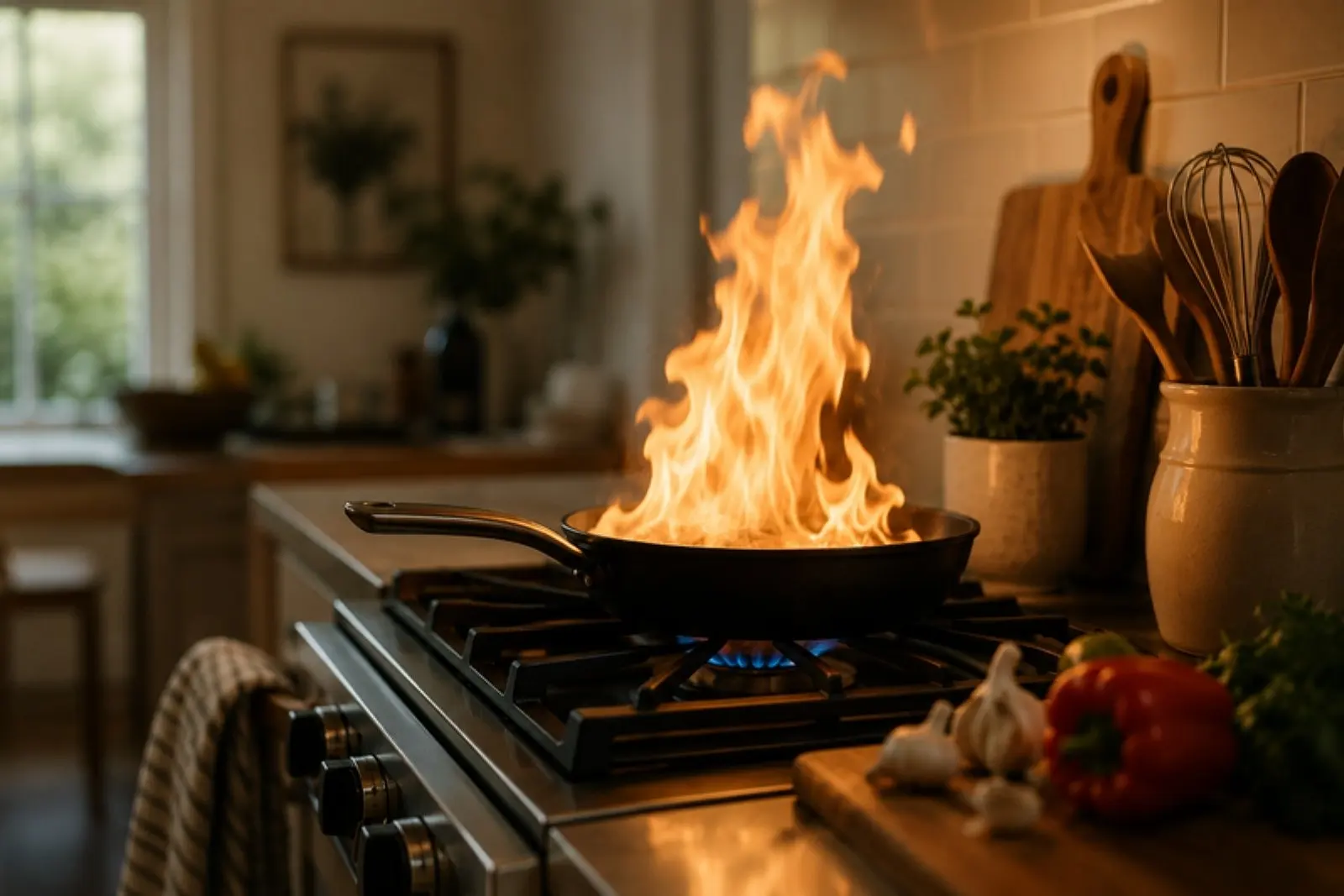
Water makes a grease fire worse, since it causes the burning oil to splatter and spread rather than putting it out. If a pan catches fire, the safest response is to slide a lid over it to cut off the oxygen and turn off the heat, or use baking soda for a small flare-up. Never carry a flaming pan to the sink or the door. If the fire spreads beyond the pan itself, get everyone out and call 911 instead of continuing to fight it.
Keep the Right Extinguisher Within Reach, Not Right Next to the Stove
A standard ABC extinguisher can knock down flames temporarily, but it won't cool a grease fire, and the oil can reignite once it's still hot. A Class K extinguisher, which uses a wet chemical to cool burning oil below its ignition point, is the right tool for a kitchen grease fire, and it's worth having one in the house if you fry or deep-fry regularly. Store it a few feet from the stove rather than directly beside it, so it's reachable without having to lean over an active flame.
Clear a Buffer Zone Around Every Burner
Dish towels, oven mitts, paper towel holders, wooden utensils, and curtains all belong at least a few feet from any burner in use. Loose sleeves and dangling jewelry are common and underrated ignition risks, since they can catch a flame without the cook even noticing. Turn pot handles inward so they can't be bumped or grabbed by a curious kid or pet, and keep kids and pets a few feet back from the stove while it's on.
Place Smoke Alarms Where They'll Actually Catch a Kitchen Fire
A smoke alarm mounted too close to the stove triggers so many nuisance alarms from ordinary cooking that households often disable it, which defeats the purpose. As a rule of thumb, keep smoke alarms several feet away from cooking appliances, and use a photoelectric alarm in or near the kitchen, since that type is less prone to false alarms from cooking smoke than an ionization alarm. Never disable an alarm while cooking. If it's going off constantly, move it or swap the alarm type instead.
What Most Households Get Wrong
The biggest gap isn't awareness; it's what people reach for in the first ten seconds of a grease fire. Throwing water on a pan fire, moving a flaming pan toward the sink, or reaching for a general-purpose extinguisher that won't actually cool the oil are all common instincts that make a small kitchen fire worse instead of better. The right response is almost always to smother it and cut the heat, not to douse it.
The second most common gap is treating "I'm still in the room" as the same thing as "I'm paying attention." Plenty of cooking fires start while someone is technically present in the kitchen but focused on their phone, a conversation, or another task across the room. Active cooking, especially anything involving oil, needs actual eyes on the pan, not just proximity to it.
Building This Into a Habit, Not a One-Time Fix
Unlike smoke alarms or dryer vents, kitchen fire safety isn't really a twice-a-year maintenance item, it's a set of habits that need to hold up every time you cook. The one moment worth treating like a seasonal checklist is the run-up to a big cooking day: Thanksgiving, Christmas, or any holiday where more burners are going at once than usual. Walking through the checklist above the week before a big cook, confirming the extinguisher is charged and accessible, and briefing anyone helping in the kitchen on the "stay attentive, don't use water on grease" rule takes a few minutes and matters most exactly when the statistics say it matters most.
Why a Personal Assistant Is the Easiest Way to Actually Get This Done
Kitchen safety is one of those things that's easy to know and easy to let slide in practice, especially in a busy household where multiple people cook and equipment gets replaced or moved around without anyone re-checking the basics. A personal assistant can confirm the extinguisher is charged and in the right spot, check that smoke alarms are placed correctly, and do a quick walkthrough before a big holiday cooking day so it's one less thing on your plate in the middle of hosting.
It's a good example of what a personal assistant actually does day to day. The work is quiet and unglamorous, not glamorous errands or exciting projects, but it's exactly the kind of task that protects your family and your home while rarely feeling urgent enough to prioritize on your own. If you've been wondering whether this kind of support makes sense for your household, our post on what a personal assistant actually does is a good next read, and our signs you need a personal assistant guide can help you figure out whether now is the right time.
Ready to stop being the only one keeping track of this? Hire a personal assistant and we'll fold your kitchen and home safety checks, along with everything else on your list, into a schedule that actually gets followed. You can also browse our full services or check common questions on our FAQ page before you reach out.
Frequently Asked Questions
What's the leading cause of home fires? Cooking. It accounts for about 44 percent of all reported home structure fires in the U.S., more than any other cause, according to the National Fire Protection Association. Unattended cooking is the single biggest contributing factor within that category.
What should I do if a grease fire starts? Turn off the heat and slide a lid over the pan to cut off oxygen, or smother a small flare-up with baking soda. Never pour water on a grease fire, since it causes the burning oil to splatter and spread. If the fire grows beyond the pan, get out of the house and call 911 rather than continuing to fight it.
Do I need a special fire extinguisher for the kitchen? A Class K extinguisher is built specifically for grease and cooking oil fires, cooling the oil below its ignition point rather than just knocking down the flame the way a standard ABC extinguisher does. If you fry or deep-fry often, it's worth keeping one within reach of the kitchen but not directly next to the stove.
Why does my smoke alarm keep going off when I cook? It's likely mounted too close to the stove or is an ionization-type alarm, which is more sensitive to the kind of smoke and steam normal cooking produces. Moving the alarm a few feet farther from the cooking appliance or switching to a photoelectric alarm typically solves this without leaving your kitchen unprotected.
Why are cooking fires so much more common on Thanksgiving? More people are cooking more dishes on more burners at once, often with more distractions in the house than on a typical day. NFPA data shows Thanksgiving is the leading day of the year for home cooking fires, with roughly a 388 percent increase over the daily average, followed by Christmas Eve and Christmas Day.
Can a personal assistant help with kitchen fire safety? Yes. Checking that your fire extinguisher is charged and accessible, confirming smoke alarms are placed correctly, and doing a quick safety walkthrough before a big cooking day are all tasks a personal assistant can take on. It's a small, practical example of the kind of quiet upkeep Friday's personal assistants handle so it doesn't fall on you to remember.
Tired of being the only one who remembers to check the kitchen extinguisher before hosting? Hire a personal assistant and let someone else keep your household's safety checklist on schedule.
Ready for an extra set of hands? Friday pairs busy Nashville and Denver households with vetted part-time and full-time personal assistants and house managers, starting at just a few hours a week. Get started with Friday →
Sources
National Fire Protection Association, "Home Cooking Fires" report
National Fire Protection Association, Safety with Cooking Equipment
National Fire Protection Association, Thanksgiving Is Leading Day of the Year for U.S. Home Cooking Fires
National Fire Protection Association, What Is a Class K Fire Extinguisher?