
A Grill Safety Checklist to Run Before Labor Day and Summer's Last Cookouts
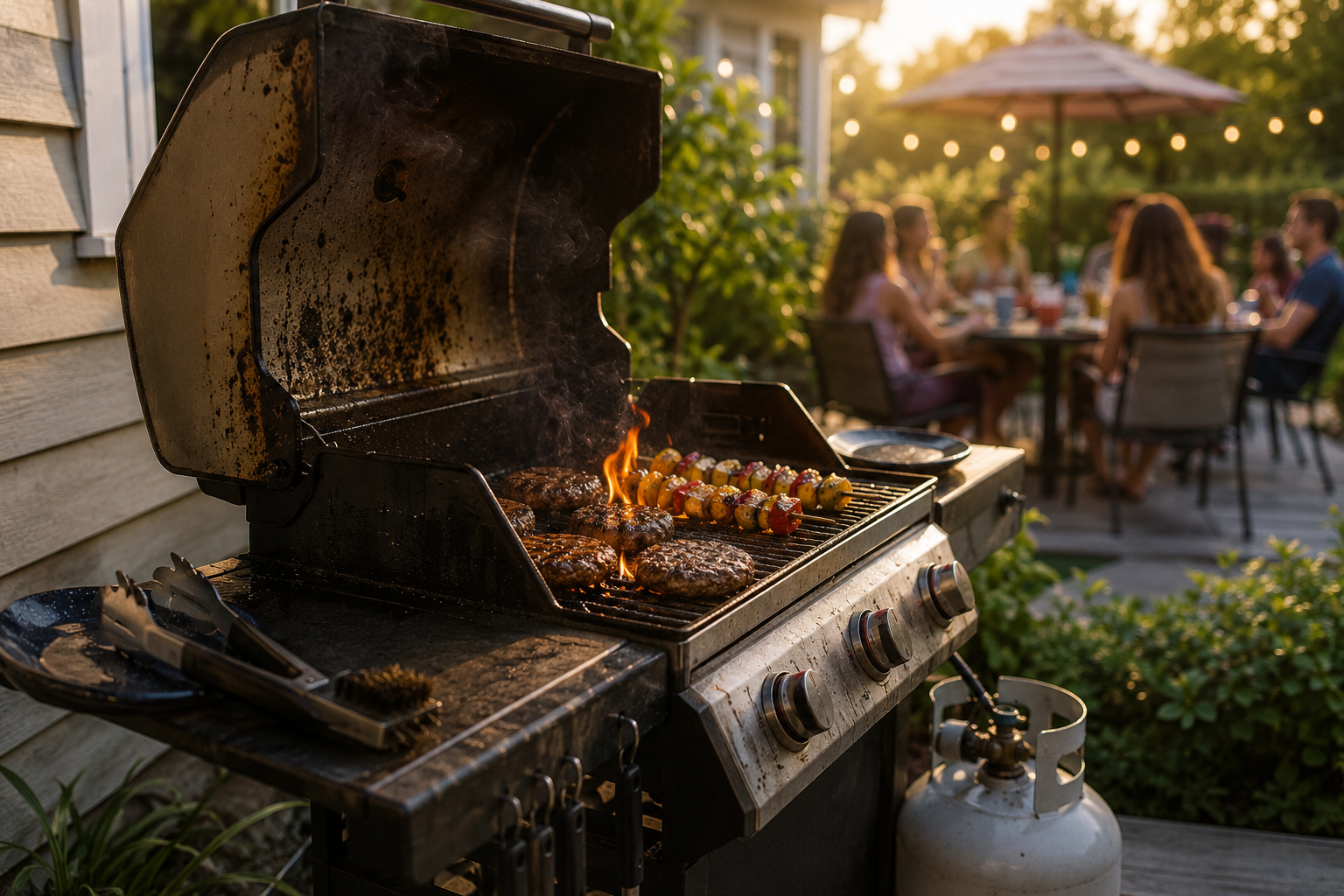
The grill gets more use in the last few weeks of summer than almost any other stretch of the year, between one more round of backyard get-togethers, Labor Day cookouts, and the last warm weekends before fall. It's also exactly when a grill that's been fired up all summer has the most built-up grease, the most worn hose connections, and the least amount of attention paid to where it's actually sitting.
Grilling fires are common, largely preventable, and cluster in a predictable set of causes. This checklist covers what actually leads to grill fires and burns, what the research says about timing and placement, and where households get comfortable in ways that quietly raise the risk.
Why This Checklist Matters More Than It Feels Like It Does
U.S. fire departments respond to an average of over 12,100 home fires involving grills, hibachis, or barbecues every year, according to the National Fire Protection Association, causing 15 deaths, 171 reported injuries, and $241 million in direct property damage annually. Beyond fire department responses, an estimated 22,000 people go to the emergency room each year for grill-related injuries, many of them burns rather than fire damage.
July is the peak month for home grilling fires, with June, May, and August close behind, according to NFPA data, which means the entire back half of summer, including Labor Day, falls squarely inside the highest-risk window rather than past it. Gas grills are involved in the large majority of these fires: 76 percent of home grilling fires involve a gas grill, compared to 13 percent for charcoal or other solid fuel.
The leading contributing factor is one almost every household can fix in five minutes: a fifth of grilling fires are caused by a grill that hasn't been cleaned, according to the NFPA, meaning built-up grease and fat are doing the igniting, not a mechanical failure.
The Complete Grill Safety Checklist
Check the Propane Connection Before You Light It
Before the first use of the season, and periodically after that, check the hose connection for leaks with a light soap-and-water solution. Bubbles forming at a connection point mean gas is escaping. If you smell gas or see bubbles and there's no flame, shut off the tank and the grill; if the smell clears, get the grill serviced before using it again, and if it doesn't clear, leave the area and call the fire department rather than continuing to investigate it yourself. If you ever smell gas while a grill is actively lit, step away immediately and call the fire department without moving the grill.
Give It Real Distance from the House
Set the grill up at least 10 feet away from your house, deck railings, overhanging branches, and anything else combustible. That distance matters for both gas and charcoal grills, and it's not just about a stray flare-up catching something on fire, radiant heat alone can be enough to melt vinyl siding or scorch a deck railing from a few feet away. Many municipal fire codes prohibit grilling directly on covered porches, balconies, or under any overhang for exactly this reason, even for grills that seem well-controlled.
Clean the Grease Before It Becomes the Fuel
Since a cleanliness gap is the single leading factor behind grilling fires, treat the grates, grease trap, and drip pan as part of the actual safety equipment, not just cleanup. Built-up grease can flare into a fire that's disproportionate to whatever you're actually cooking, particularly with fattier cuts of meat. A quick scrape after each use and a deeper clean every few weeks keeps the fuel source from quietly accumulating over a season of regular use.
Never Leave an Active Grill Unattended
Stay within sight of the grill any time it's lit, the same rule that applies to a stovetop indoors. A grill left unattended for even a few minutes is enough time for a grease flare-up, a gust of wind, or a curious pet or kid to turn a normal cookout into an emergency. Keep kids and pets at least three feet back from the grill while it's in use and for a while after, since the surface stays dangerously hot well after the flame is off.
Keep a Way to Put It Out Within Reach
Have a way to extinguish a fire before you need it: a fire extinguisher rated for the type of fire a grill can produce, or, for a charcoal grill, a way to fully close the vents and lid to smother the flame. Never use water on a grease fire, on a grill or otherwise, since it causes the burning fat to splatter rather than putting the fire out.
What Most Households Get Wrong
The most common mistake is treating a grill that's survived all summer without incident as proof that it's fine, rather than checking it. A hose connection that was solid in May can loosen slightly after months of use and storage, and a grease trap that gets emptied in June is often forgotten by August, right as usage peaks for one last stretch of cookouts.
The second common gap is grill placement that made sense once and never got revisited. A grill that started the season safely away from the house can end up much closer after furniture gets rearranged, an umbrella goes up, or a table gets pulled over for extra cookout seating. The 10-foot rule isn't a one-time setup decision, it's worth a quick glance every time you're arranging the space for a gathering.
Building This Into a Habit, Not a One-Time Fix
Before the last big cookouts of the season, whether that's Labor Day or just a few more warm weekends, run through this checklist the same way you would at the start of summer: check the connections, clean the grease trap, and confirm nothing has crept into that 10-foot buffer since the last time you looked. As the season winds down and the grill gets used less often, it's also worth doing one more thorough clean before storing or covering it, since grease left sitting through the off-season is an easy thing to forget until next year's first cookout.
Why a Personal Assistant Is the Easiest Way to Actually Get This Done
Grill maintenance is one of those tasks that's simple in isolation but easy to let slide once summer gets busy with travel, guests, and back-to-school logistics competing for attention. A personal assistant can check the propane connection, deep clean the grease trap before a big gathering, and confirm the grill's placement is still safe once outdoor furniture has been rearranged for the season.
It's a good example of what a personal assistant actually does day to day. The work is quiet and unglamorous, not glamorous errands or exciting projects, but it's exactly the kind of task that protects your family and your home while rarely feeling urgent enough to prioritize on your own. If you've been wondering whether this kind of support makes sense for your household, our post on what a personal assistant actually does is a good next read, and our signs you need a personal assistant guide can help you figure out whether now is the right time.
Ready to stop being the only one keeping track of this? Hire a personal assistant and we'll fold your grill and backyard safety checks, along with everything else on your list, into a schedule that actually gets followed. You can also browse our full services or check common questions on our FAQ page before you reach out.
Frequently Asked Questions
How common are grill fires? U.S. fire departments respond to an average of over 12,100 home fires involving grills each year, causing 15 deaths, 171 reported injuries, and $241 million in property damage, according to the National Fire Protection Association. Another estimated 22,000 people go to the emergency room annually for grill-related injuries.
What's the leading cause of grill fires? A grill that hasn't been cleaned. About one-fifth of grilling fires are caused by built-up grease and fat igniting, according to the NFPA, which makes routine cleaning one of the most effective safety steps a household can take.
How far should a grill be from the house? At least 10 feet from the house, deck railings, overhanging branches, and any other combustible material. This applies to both gas and charcoal grills, since radiant heat alone, not just a flare-up, can scorch siding or a deck railing from a few feet away.
How do I check a gas grill for leaks? Apply a light soap-and-water solution to the hose and connections. Bubbles mean gas is escaping. If there's no flame, shut off the tank and grill; if the leak stops, have it serviced before the next use. If the leak doesn't stop, or if you ever smell gas while the grill is lit, move away and call the fire department rather than investigating it yourself.
Is grilling season really still a risk this late in summer? Yes. July is the peak month for grill fires, with June, May, and August close behind, according to NFPA data, which means the final weeks of summer, including Labor Day, fall inside the highest-risk stretch of the year rather than past it.
Can a personal assistant help with grill safety? Yes. Checking the propane connection, deep cleaning the grease trap, and confirming grill placement is still safe after outdoor furniture gets rearranged are all tasks a personal assistant can take on. It's a small, practical example of the kind of quiet upkeep Friday's personal assistants handle so it doesn't fall on you to remember.
Tired of being the only one who remembers to check the grill's propane hose? Hire a personal assistant and let someone else keep your household's safety checklist on schedule.
Sources
National Fire Protection Association, Home Grill Fires report
National Fire Protection Association, Grilling Safety Facts & Resources
