
Summer's Winding Down, Pool Risk Isn't: The Backyard Safety Checklist to Run Before You Close Up
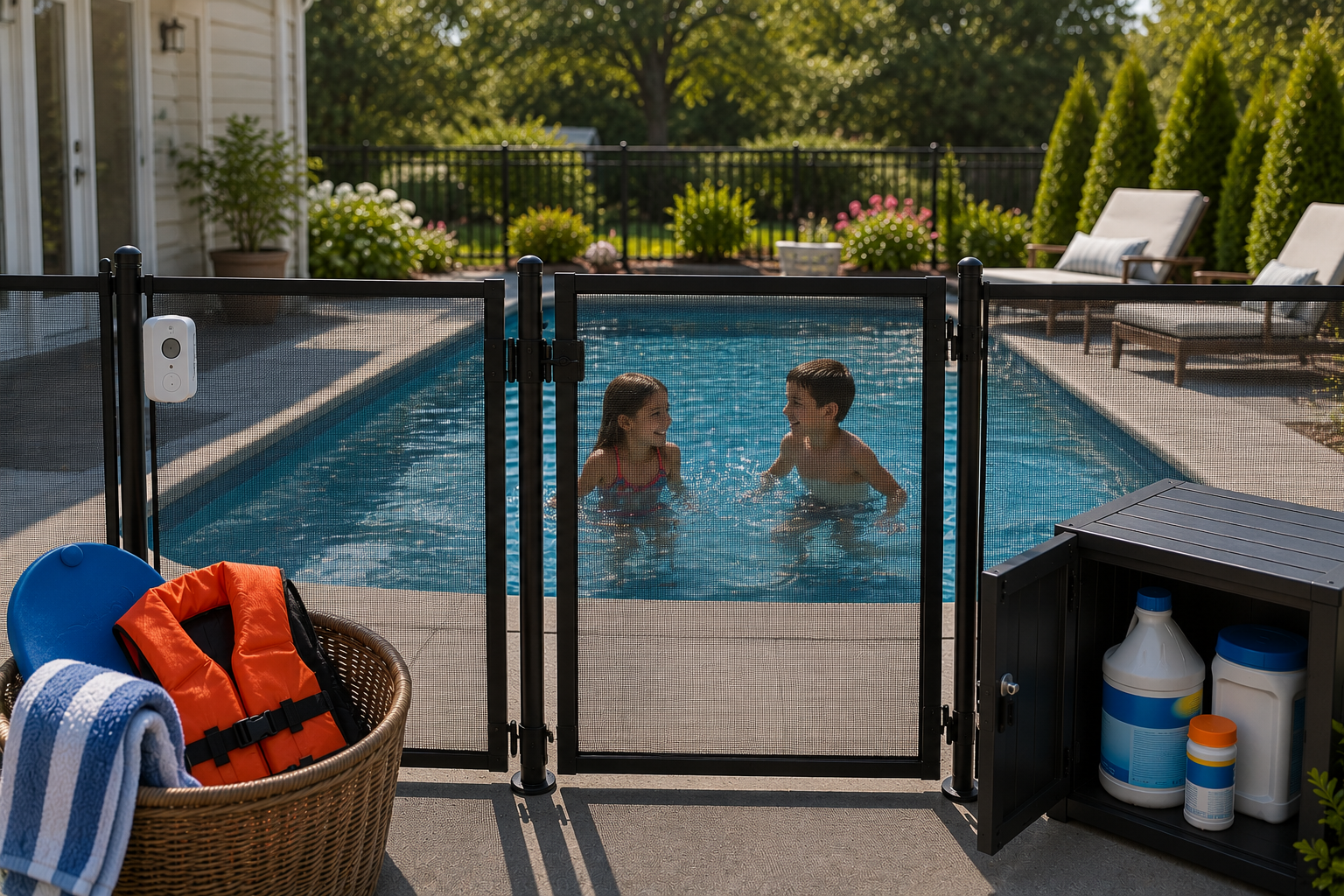
With summer heading into its final stretch, it's tempting to treat pool safety as a spring problem you already solved back in May. The data says otherwise. Drowning risk stays elevated straight through August, and the last few weeks of the season, with Labor Day gatherings, one more round of visiting cousins, and routines starting to loosen as school picks back up, are exactly when supervision habits tend to slip fastest.
Drowning is the leading cause of death for children ages 1 to 4 in the United States, and most of those drownings happen in home swimming pools, not lakes, rivers, or public pools. It's one of the few safety risks where the danger is completely silent: there's no smoke, no alarm, no smell. A child can slip into a pool and go under within a couple of minutes, often while an adult is nearby but not actively watching.
The good news is that the research on prevention is unusually clear. A handful of physical barriers and habits, layered together, cut the risk dramatically. This checklist breaks down what actually works, what the data says about where households fall short, and why the final weeks of pool season deserve the same attention as opening day.
Why This Checklist Matters More Than It Feels Like It Does
More children ages 1 to 4 die from drowning than from any other cause, and most drownings in that age group happen in home swimming pools, according to the CDC. Nationally, there are more than 4,000 unintentional drowning deaths every year in the U.S., along with an estimated 8,000 nonfatal drownings, some of which cause lasting brain injury.
Fatal drownings among children under 15 are consistently highest during June, July, and August, according to a 2026 CPSC report, with an average of 376 fatal drownings a year in that age group and nearly 80 percent of victims under age five. More than 70 percent of those fatal drownings happened in residential settings, not public pools. Late summer isn't a lower-risk window than June, it's still squarely inside the season the data flags as most dangerous.
The clearest single fix is fencing, and the type of fence matters more than most homeowners realize. A four-sided isolation fence, one that separates the pool area from both the house and the yard, reduces a child's risk of drowning by 83 percent compared to a fence that just runs along the property line, according to CDC research. A perimeter fence around the whole yard still leaves the house itself as an unguarded fourth side, which is exactly the gap a four-sided fence closes.
Pool chemicals carry their own, less obvious risk. Pool chemical injuries send an estimated 13,500 people to the emergency room every year in the U.S., and more than half of those injuries happen at a residence, not a public pool, according to a CDC analysis of national injury data. Most are caused by inhaling fumes while opening containers or mixing chemicals that should never be combined, like chlorine and acid.
The Complete Pool and Backyard Safety Checklist
Fence It Off Completely, Not Just the Yard
Surround the pool or spa itself with a fence at least four feet high, separate from any fence around the property line, so the water is enclosed on all four sides. Gates should be self-closing and self-latching, opening away from the pool, with the latch mechanism out of a small child's reach. If your house forms one side of the enclosure, that wall counts as your fourth side only if every door leading to the pool area is alarmed, since an unlocked patio door defeats the purpose of the fence on the other three sides.
Back the Fence Up with Alarms and Covers
Door and pool alarms add a second layer of protection in case a gate is left open or a child gets past the fence line. A power safety cover, a motor-operated barrier that closes over the water when the pool isn't in use, adds a third layer and is especially useful for households that can't maintain a full four-sided fence year-round. If you have an above-ground pool, remove or lock the ladder when it's not in use, or surround it with its own barrier, since an accessible ladder undermines the rest of the fencing.
Designate a Water Watcher, Every Time
Supervision gaps, not the absence of a pool cover, cause most home drownings, since drowning happens quickly and quietly, often while an adult is present but distracted. Whenever kids are in or near the water, assign one adult as the dedicated Water Watcher, someone whose only job is to watch the pool, phone down, for a set stretch of time before handing the role to someone else. "Several adults were around" is not the same as "one adult was actually watching," and that distinction is where most preventable drownings happen.
Store and Handle Pool Chemicals Like the Hazard They Are
Keep pool chemicals in their original, labeled containers, in a well-ventilated space, locked away from children. Never mix different chemicals together, and never mix chlorine products with acid, since the combination can produce toxic gas. Add chemicals to water, not water to chemicals, unless the product label specifically says otherwise, and always read the label before each use rather than relying on memory from the last time you handled it.
Treat Swimming Lessons and Life Jackets as Prevention, Not Extras
Formal swimming lessons measurably reduce drowning risk in children and young adults, according to the CDC, and are worth prioritizing well before a child is expected to be near open water unsupervised. For weak swimmers of any age, a properly fitted life jacket is meaningfully safer than a pool noodle or inflatable floatie, which aren't designed to keep a struggling swimmer's head above water.
What Most Households Get Wrong
The most common mistake is treating a yard fence as pool protection. A fence around the property line keeps out the neighborhood, but it doesn't stop a child from walking out the back door and straight into the water, which is exactly why isolation fencing performs so much better in the data. If your house forms part of the pool enclosure, the doors leading to it need their own alarms or locks, not just the assumption that someone will notice a child wandering outside.
The second common gap is confusing group supervision with active supervision. It's easy to assume that with several adults around during a pool party, someone is always watching the water. In practice, that diffusion of responsibility is exactly how supervision gaps happen, since everyone assumes someone else has eyes on the kids. A named Water Watcher, rotated on a timer, closes that gap in a way that a general sense of "we're all keeping an eye out" doesn't.
Building This Into a Habit, Not a One-Time Fix
Most households run a version of this checklist in spring, when the pool first opens, and then let it fade into the background by late summer. Run it again now. Confirm every gate still self-closes and self-latches after a season of kids, guests, and pool furniture propping it open, check that door alarms haven't quietly been switched off, and make sure the pool cover's control is still out of reach of kids. If Labor Day weekend or a last back-to-school pool party is on the calendar, treat it like the higher-risk gathering the data says it is: more guests, more distraction, and a Water Watcher who isn't also trying to grill.
When the pool does close for the season, the checklist doesn't stop. An unsupervised pool that looks "closed" is still an open body of water to a curious kid, so keep the fence, gates, and cover in place and functional through the off-season rather than treating them as summer-only equipment.
Why a Personal Assistant Is the Easiest Way to Actually Get This Done
Pool and backyard safety is full of small, physical things that are easy to check but easy to let slide, especially once a pool has been in the family for a few years and the original safety setup feels like old news. A personal assistant can walk the fence line to confirm gates still self-latch, coordinate with your pool service on chemical storage and delivery, and help set up a Water Watcher rotation before a family gathering so it isn't left to chance.
It's a good example of what a personal assistant actually does day to day. The work is quiet and unglamorous, not glamorous errands or exciting projects, but it's exactly the kind of task that protects your family and your home while rarely feeling urgent enough to prioritize on your own. If you've been wondering whether this kind of support makes sense for your household, our post on what a personal assistant actually does is a good next read, and our signs you need a personal assistant guide can help you figure out whether now is the right time.
Ready to stop being the only one keeping track of this? Hire a personal assistant and we'll fold your pool and backyard safety checks, along with everything else on your list, into a schedule that actually gets followed. You can also browse our full services or check common questions on our FAQ page before you reach out.
Frequently Asked Questions
What's the leading cause of death for young children in the U.S.? Drowning is the leading cause of death for children ages 1 to 4, and most drownings in that age group happen in home swimming pools, according to the CDC.
What kind of pool fence actually works? A four-sided isolation fence, one that separates the pool from both the house and the yard rather than just running along the property line, reduces a child's drowning risk by 83 percent compared to perimeter fencing, according to CDC research. If your house forms one side of the enclosure, every door leading to the pool area needs its own alarm or lock.
Are pool alarms and covers enough on their own? No. Barriers like fences, alarms, and safety covers are layers of protection, not substitutes for supervision. CDC and CPSC guidance both stress that a dedicated adult should be actively watching the water any time children are in or near it, regardless of what barriers are in place.
How common are pool chemical injuries at home? Pool chemical injuries send an estimated 13,500 people to the emergency room each year in the U.S., and more than half of those injuries happen at a residence rather than a public pool, according to a CDC analysis. Most are caused by inhaling fumes or mixing chemicals, like chlorine and acid, that should never be combined.
Are floaties a safe substitute for a life jacket? No. Pool noodles and inflatable floaties aren't designed to keep a struggling swimmer's head above water. For weak swimmers of any age, a properly fitted life jacket is the safer choice, and swimming lessons measurably reduce drowning risk over time.
Can a personal assistant help with pool and backyard safety? Yes. Checking that gates self-latch, coordinating pool chemical deliveries and storage, and helping set up a Water Watcher rotation before a gathering are all tasks a personal assistant can take on. It's a small, practical example of the kind of quiet upkeep Friday's personal assistants handle so it doesn't fall on you to remember.
Tired of being the only one who remembers to check the pool gate latch? Hire a personal assistant and let someone else keep your household's safety checklist on schedule.
Sources
Centers for Disease Control and Prevention, Risk Factors for Drowning
Centers for Disease Control and Prevention, Drowning Data
Centers for Disease Control and Prevention (MMWR), Pool Chemical Injuries in Public and Residential Settings — United States, 2008–2017, and New York, 2018
U.S. Consumer Product Safety Commission, CPSC Report Highlights Persistent Risk of Childhood Drowning
U.S. Consumer Product Safety Commission, Pool Safely, Summer Safety Barrier Checklist for Pool and Spa Owners
